Why Every Patient on Semaglutide or Tirzepatide Needs a Nutrition-and-Muscle Protocol from Day One
Updated: Jun 14
I know that this title may seem misleading given my positive stance on GLP-1s. However, it highlights a significant issue with periodicals and their tendency to use clickbait titles.
Unfortunately, you often only discover the author's true message after reading through half the article. This can lead to misunderstandings about the importance of these groundbreaking medications. Titles like these can also fuel rumors that patients should stop using these medications when they should not.
A recent commentary in BBC Science Focus (May 2026) raised a concern that has been quietly circulating in obesity medicine, nephrology, and geriatric clinics for the past two years. GLP-1 and dual GLP-1/GIP receptor agonists are extraordinarily effective for weight loss. However, the very mechanism that makes them work—reducing appetite and slowing gastric emptying—can lead to protein insufficiency, micronutrient depletion, and accelerated lean-mass loss if not monitored.
The warning is valid. The conclusion, however, is not that we should pull back on these drugs. Instead, we should stop prescribing them as monotherapy and start integrating them into a structured nutrition-and-muscle-preservation framework.

The reality is that most providers, both primary care and specialists, need to have these conversations with patients. Decreased intake will lead to decreased protein consumption and ultimately a loss of muscle mass. This loss in muscle mass increases the risk of many chronic diseases, including cardiac, kidney, diabetes, and brain health issues, which these medications aim to protect against. Proper education in nutrition and a protein-first approach can help mitigate these negative effects.
My concern lies with individuals who do not receive guidance from qualified providers. They can now purchase these medications online without restrictions or any understanding of the long-term health implications.
What the Data Actually Shows
In the SURMOUNT-1 body-composition substudy, tirzepatide produced impressive weight loss. However, the composition of that loss is what clinicians need to focus on: roughly three-quarters of the weight lost was fat mass, while about one-quarter was lean mass. Semaglutide trials show a similar pattern, with dramatic fat-mass reduction and a notable lean-mass signal in some patients.
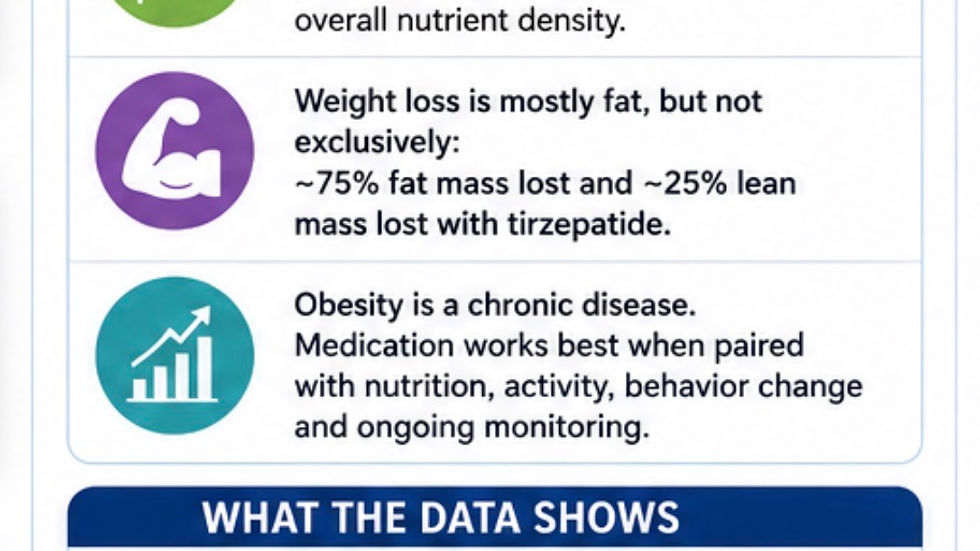
A 25% lean-mass component is not unique to GLP-1 therapy. It broadly reflects the physiology of rapid weight loss across various modalities, including bariatric surgery and aggressive caloric restriction. The clinically meaningful question is not whether DXA shows a lower lean-mass number; it is whether the patient loses functional muscle, strength, bone density, and metabolic resilience. These variables determine whether a patient ages well or accelerates into frailty.
That distinction matters. Lean-mass loss in a 38-year-old with sarcopenic obesity and a high baseline of muscle reserve is a different clinical event than the same percentage loss in a 72-year-old with CKD stage 3b, low grip strength, and a history of falls.
Where the “BBC Science Focus” Piece is Right, and Where it Stops Short
The article correctly points out that micronutrient and protein monitoring protocols specific to GLP-1 therapy are not yet standardized. Current best practices are extrapolated from bariatric nutrition, obesity medicine, and the physiology of negative energy balance. This is a real gap that deserves attention.
However, the piece does not fully address that GLP-1 risk is not universal. The patients at highest risk for nutritional injury are often those I see in my practice:
Older adults and those prone to frailty
Patients with CKD, especially stages 3b–5 and post-transplant
Patients with established or subclinical sarcopenic obesity
Post-bariatric patients adding pharmacotherapy
Patients on plant-predominant or vegetarian diets without a deliberate protein strategy
Patients experiencing persistent nausea, vomiting, or early satiety during dose escalation
Patients with a history of eating disorders
For these populations, GLP-1 therapy without a nutritional scaffold is not a neutral act. It sets the stage for entirely preventable medical issues.
The CRIMS Lens: A Cardio-Renal-Metabolic Question
Within my clinical framework, Cardio-Renal-Inflammatory-Metabolic-Sarcopenia (CRIMS), muscle is not merely a cosmetic concern. Skeletal muscle is the body’s largest glucose-disposal organ, a major contributor to resting metabolic rate, a reservoir of amino acids during illness, and a powerful determinant of cardiovascular and renal outcomes. In CKD specifically, low muscle mass and low muscle quality are independently associated with mortality, hospitalization, and worse trajectories of kidney function.
In other words, the goal of GLP-1 therapy in a cardio-renal-metabolic patient is not just weight loss. It is fat-mass loss with muscle preservation and metabolic restoration. The drug is one input, but the protocol surrounding it determines whether we achieve that outcome or inadvertently create a thinner, weaker, and more fragile patient.
A Practical GLP-1 Safety Bundle
The following framework is what I use and advocate as a standard of care in any clinic prescribing these agents at scale.
Baseline Nutrition and Function Screen: Assess weight trajectory, conduct a 24-hour diet recall, estimate protein intake, inventory gastrointestinal symptoms, and evaluate alcohol use, constipation history, and frailty/sarcopenia (grip strength, chair-stand test, gait speed where feasible).
Laboratory Baseline: Conduct tests at baseline and repeat every 3–6 months for higher-risk patients. Tests should include CBC, comprehensive metabolic panel, magnesium, phosphorus (when clinically relevant), iron studies, ferritin, vitamin B12, folate, 25-hydroxyvitamin D, and calcium/PTH when indicated. In CKD patients, this overlaps significantly with routine monitoring and adds little burden.
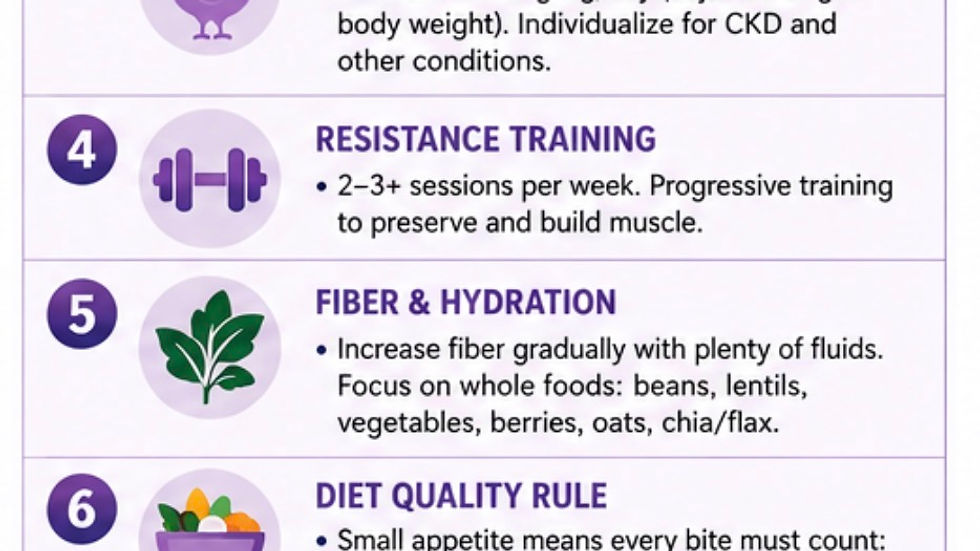
Protein Target: For most patients without advanced CKD, a target of 1.2–1.6 g/kg/day using adjusted or goal body weight is reasonable. This should be distributed across meals to support muscle protein synthesis. In advanced CKD, the target is individualized based on dialysis status, residual kidney function, and overall goals of care. In nearly every case, “small appetite plus low protein” is the combination that produces sarcopenia, not protein itself.
Resistance Training: Implement two to three progressive sessions per week, emphasizing compound movements such as squats, hinges, presses, pulls, and carries. This is not optional. Pharmacologic appetite reduction without resistance training is the clearest recipe for lean-mass loss on GLP-1 therapy.
Fiber and Hydration: Introduce beans, lentils, vegetables, berries, oats, chia, flax, and psyllium when needed. Fiber helps address constipation, which frequently accompanies these drugs, and supports gut-microbiome health, crucial for cardio-renal-metabolic outcomes.
The “Every Bite Counts” Rule: When appetite is pharmacologically reduced, dietary quality matters more, not less. Prioritize protein, followed by plants, and limit ultra-processed foods. Patients should view this as a guiding principle rather than a restrictive diet.
Function and Body-Composition Tracking: Monitor waist circumference, weight, grip strength, chair-stand performance, walking speed, and, when available and indicated, utilize DXA or bioimpedance. The goal is to track what truly matters, not just the scale.
Side-Effect Management: Implement slow titration, smaller and lower-fat meals during nausea, an aggressive constipation protocol, and a clear plan for managing oral intake collapse. A patient consuming only 600 kcal a day due to unmanaged nausea is NOT “responding well” to therapy; they are accumulating a problem.
The Bottom Line
The emerging professional consensus across obesity medicine, lifestyle medicine, and nephrology converges on a single point: GLP-1 and GLP-1/GIP receptor agonists are among the most significant pharmacologic advances of the past two decades. They deliver their best outcomes when embedded in a structured program of nutritional support, resistance training, micronutrient surveillance, behavioral care, and long-term follow-up.
The warning from BBC Science Focus is not an argument against these drugs. Instead, it cautions against prescribing them casually. Obesity is a chronic disease. The tools we now have are powerful enough that the question is no longer whether we can achieve weight loss, but whether we can achieve the “right” weight loss—one that is durable, muscle-preserving, metabolically restorative, and aligned with the cardio-renal-metabolic outcomes that genuinely shape a patient’s life.
That is a higher bar. It is also the standard we should hold ourselves to.
-----
Andrew Kowalski, MD, FASN, is a practicing nephrologist specializing in cardio-renal-metabolic medicine and the developer of the CRIMS (Cardio-Renal-Inflammatory-Metabolic-Sarcopenia) clinical framework.